
A whine or hum that rises with vehicle speed deserves a careful inspection because the sound may come from the differential, tires, wheel bearings, or transmission. If you need differential repair in Houston, TX, our team can trace the sound before recommending a repair. Noting when the noise changes gives the technician a useful starting point, but sound alone cannot confirm the failed part.
Why a Speed-Related Whine or Hum Matters
A speed-related sound points toward a rotating part that follows road speed. The pattern can help separate drivetrain noise from an engine sound that changes with engine RPM, even while the vehicle is stopped.
Whine on Acceleration or Coast
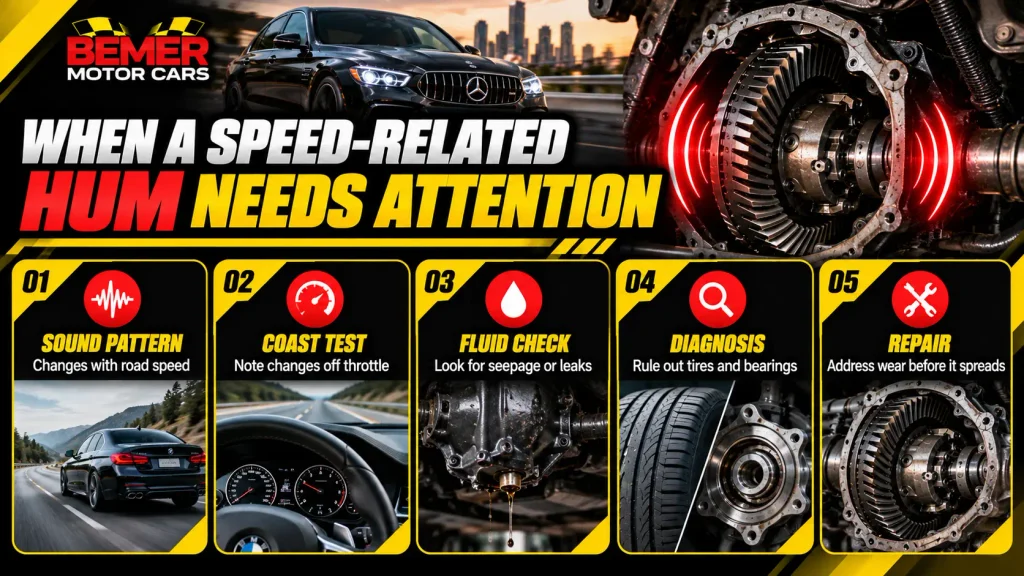
A whining noise that changes with speed may become stronger under acceleration, during steady cruising, or when you release the throttle. A gear or bearing problem can change tone as load moves across different surfaces inside the differential. Tell the technician whether the sound appears on throttle, off throttle, or in both conditions.
Hum That Follows Road Speed
A humming noise while driving may stay tied to vehicle speed even when the engine shifts gears. Tires with uneven wear and worn wheel bearings can make a similar drone, so the location and behavior of the sound matter. A wheel-bearing hum may change during a gentle lane change, while tire noise often varies with the pavement.
What Can Cause Differential Noise
Differential noise can start when the lubricant is low or degraded, bearings wear, or gear contact changes. European rear-wheel-drive and all-wheel-drive systems may use different fluids and service methods, so the vehicle specification must guide the work.
Low or Contaminated Fluid
Differential fluid creates a protective film between gears and bearings. A low level, wrong fluid, or heavy contamination can reduce that protection and allow noise or wear. Fluid condition can offer clues, but adding fluid will not repair damaged gears or bearings.
Worn Bearings or Gears
Worn pinion or carrier bearings can create a hum, howl, or rough growl that follows road speed. Ring-and-pinion wear can also produce a whine that changes between acceleration and deceleration. A technician must inspect the assembly and check its operating pattern before deciding whether adjustment, bearing service, or rear differential repair is appropriate.
Leaking Seals and Heat
Axle and pinion seals can leak over time, lowering the lubricant level. Houston’s heat, long runs on I-10 or Loop 610, and towing can add operating load, but they do not identify the failed component by themselves. Fresh wetness near the differential or spots under the vehicle are reasons to arrange an inspection.
For BMW owners, our BMW service in Houston, TX, includes differential and transfer-case service as well as checks for axle, driveshaft, and drivetrain vibration concerns.
How Technicians Find the Source
Diagnosis should confirm where the noise begins before any parts are replaced. At Bemer Motor Cars, we consider the driving pattern, inspect the related components, and match the findings to the vehicle’s drivetrain design.
Road Test and Sound Pattern
A road test helps reproduce the sound under controlled conditions. The technician may compare acceleration, cruise, coast, and gentle turning. On Westheimer Road, stop-and-go driving may hide a faint hum that becomes clearer at steady highway speed, so explain where you hear it most often.
Follow safe conditions when observing a noise. Keep your attention on traffic, avoid abrupt maneuvers, and use TxDOT highway-driving guidance when planning a highway test. A passenger can record the conditions, or you can leave the road test to the shop.
Fluid, Leak, and Drivetrain Inspection
Inspection may include the fluid level and condition, seals, bearings, mounts, axles, driveshaft, tires, and wheel bearings. Metal debris or a burnt odor can support an internal wear finding, while an external leak may explain a low level. The next step depends on the evidence rather than the sound description alone.
Some transmission faults can also whine or change under load. Our transmission diagnosis and fluid service helps distinguish shifting or gearbox concerns from a differential problem. That distinction matters because the systems may share symptoms but require different repairs.
When to Stop Driving
Stop driving when the noise becomes a grind, the vehicle develops a strong vibration, or you feel binding or jerking during turns. A sudden fluid leak, burning odor, or loss of stable power delivery also calls for prompt attention. Continuing to drive can spread wear through gears, bearings, axles, or other drivetrain parts.
A faint, steady hum without handling changes may not require an immediate roadside stop, but it still needs inspection. Houston traffic and high-speed travel leave little room for a worsening drivetrain problem. Arrange service before a quiet noise becomes a loud mechanical warning.
Takeaways
A whine or hum that follows road speed can come from the differential, but tires, wheel bearings, axles, and the transmission can sound similar. Note whether the noise changes during acceleration, coasting, or turning, and look for leaks without crawling beneath an unsupported vehicle.
Accurate testing is the safest path to the right repair. Our European auto repair team in Houston works with European drivetrain systems. We can determine whether the vehicle needs fluid service, a seal or bearing repair, or more extensive differential work.
Frequently Asked Questions
Can I drive with a whining differential?
You may be able to drive a short distance with a mild whine, but the vehicle should be inspected soon. Stop driving if the sound becomes a grind, vibration increases, fluid is leaking, or the vehicle binds during turns.
Does differential noise get louder with speed?
Yes, differential noise often becomes louder or higher in pitch as road speed increases. Its tone may also change between acceleration and coasting because the load shifts across the gears and bearings.
Can tires sound like a bad differential?
Yes, cupped or unevenly worn tires can create a hum that resembles a differential or wheel-bearing problem. A technician can compare tire wear, wheel-bearing behavior, and drivetrain load changes to isolate the source.
What does low differential fluid sound like?
Low differential fluid can cause whining, howling, or grinding noises when gears and bearings lack adequate lubrication. These sounds do not confirm low fluid, so a technician should inspect the differential for fluid level, condition, leaks, and internal wear.
How is a differential problem diagnosed?
A differential problem is diagnosed through a road test, leak and fluid inspection, and checks of bearings, gears, axles, and related drivetrain parts. The technician also rules out tires, wheel bearings, and transmission concerns before recommending work.
Schedule Differential Service in Houston
For differential repair in Houston, TX, contact Bemer Motor Cars to arrange an inspection. You can schedule European auto service or call (713) 266-2690 to describe when the sound occurs. Our shop is located at 9201 Richmond Ave., Houston, TX 77063, near the Westheimer Corridor and accessible from the Galleria, Memorial, and west Houston.