
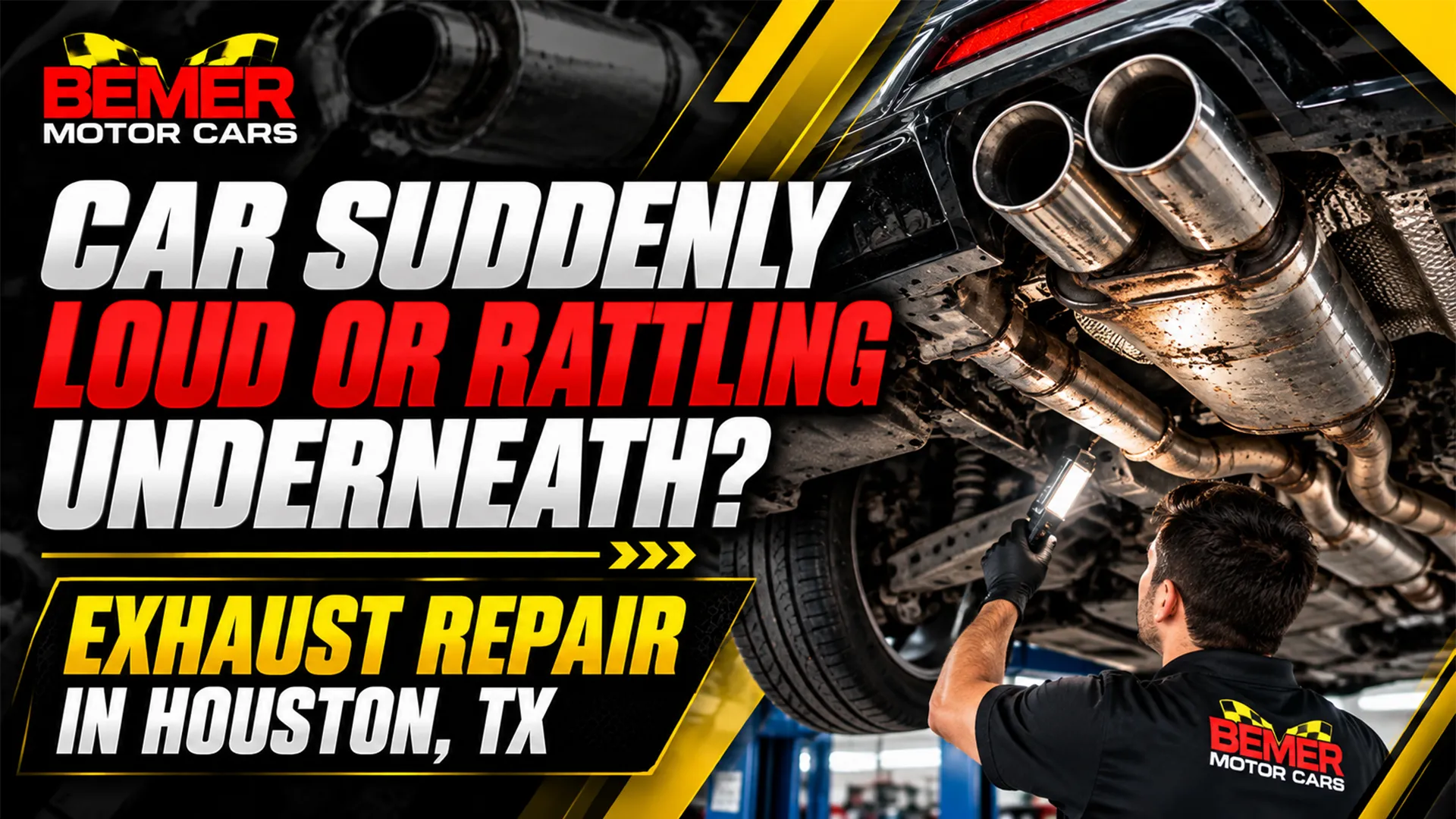
A car that suddenly sounds louder or rattles underneath may have an exhaust leak, loose shield, damaged hanger, or failing internal part. If you need exhaust repair in Houston, TX, a full inspection can identify the source before any part is replaced. Bemer Motor Cars provides exhaust system repair for European vehicles and checks the pipes, joints, mounts, muffler, converter, and sensor data as needed.
The sound itself offers clues, but it does not confirm the repair. Pay attention to when the noise happens, whether you smell exhaust, and whether the check engine light or a loss of power appears.
What a Sudden Loud Exhaust or Rattle Usually Means
A sudden change in exhaust sound usually points to a new opening, a loose support, or a part moving inside its housing. The location and timing of the noise can help a technician narrow the inspection.
A Deep Roar or Growl
A deep roar often means exhaust gas is escaping before it reaches the tailpipe. A split pipe, failed flex section, loose flange, or damaged muffler can all create loud exhaust noise. The sound may become stronger during acceleration because exhaust flow rises as the engine works harder.
A Metallic Rattle or Buzz
A metallic rattle often comes from a loose heat shield, worn rubber hanger, broken bracket, or contact between the exhaust and body. Drivers hearing rattling underneath their car may notice the sound over bumps, at idle, or within a narrow engine speed range. A technician should also rule out suspension parts or an underbody panel before blaming the exhaust.
A Tick Near the Engine
A ticking sound near the engine can come from a manifold crack or failed manifold gasket. It may be strongest during a cold start, then soften as metal warms and expands. Engine noises can sound similar, so diagnosis should include the exhaust manifold area and nearby components.
Common Parts Behind Exhaust Noise
Several exhaust components can create similar sounds, which is why the repair should follow an inspection. The most common sources include mounting hardware, seals, pipes, sound-control parts, and emissions components.
Hangers and Heat Shields
Hangers support the exhaust while allowing controlled movement as the system heats and cools. A stretched hanger can let a pipe strike the body or rear suspension. Thin heat shields can also loosen around their fasteners and buzz at idle or during acceleration.
Flex Pipes, Gaskets, and Manifolds
Flex pipes absorb engine movement, while gaskets seal joints between exhaust sections. Age, movement, impact, and repeated heat cycles can open those joints. Common exhaust leak symptoms include a sharper engine note, ticking, exhaust odor, reduced fuel economy, or soot near a connection.
Mufflers and Catalytic Converters
A muffler can rust, crack, or develop loose material inside. A catalytic converter may also rattle if its internal substrate breaks, but sound alone cannot prove converter failure. Exhaust flow, fault codes, oxygen-sensor readings, and temperature checks may be needed before replacement is considered. Bemer Motor Cars can use computerized engine diagnostics when noise appears with a warning light or drivability change.
Can You Keep Driving With an Exhaust Rattle?
Whether you can keep driving depends on odor, vehicle behavior, and whether anything is loose beneath the car. Some rattles allow a short, careful trip to a shop, while others call for stopping and arranging a tow.
Signs to Stop Driving
Stop in a safe place if you smell exhaust inside the cabin, feel dizzy, see a pipe hanging low, or hear metal dragging. Open the windows, turn off the vehicle, move away from traffic, and arrange professional help. Do not crawl under a vehicle supported only by a jack or touch exhaust parts that may be hot.
Signs to Limit Driving and Schedule Service
A mild rattle without odor, warning lights, or power loss may permit limited driving, but it still deserves prompt inspection. Avoid long idling, hard acceleration, and deep standing water until the cause is known. If the noise grows or new symptoms appear, stop driving.
How Exhaust Problems Are Diagnosed
A sound-based complaint is diagnosed by reproducing the noise safely, inspecting the full system, and testing related engine controls when needed. This process separates a simple loose shield from a leak or restricted component.
Inspection Before Parts Replacement
The technician may begin with a cold-start check, then inspect the manifold, flex sections, flanges, pipes, hangers, heat shields, muffler, converter, and tailpipe. Soot marks, broken hardware, corrosion, and fresh impact damage can reveal the source. On a European vehicle, factory-level scan data can also show mixture or catalyst faults. Bemer Motor Cars’ Porsche repair and maintenance in Houston page confirms model-specific diagnostic support for Porsche owners.
Repair or Replacement Decisions
The right fix depends on the failed part and the condition of the surrounding system. A loose shield or hanger may need new hardware, while a cracked pipe, failed muffler, or damaged converter may need replacement. The estimate should explain what failed, what testing confirmed it, and which related parts remain serviceable.
How Houston Driving Affects the Exhaust System
Houston driving exposes the exhaust to repeated heat cycles, traffic, moisture, and road debris. Long waits near I-610 and Westheimer Road keep the system hot, while storm water wets pipes, brackets, and shields. These conditions can expose weak mounts and existing corrosion.
Houston is also in Harris County, where many gasoline vehicles remain subject to emissions testing. Texas exhaust system rules require exhaust emission equipment to remain operable and prohibit making it ineffective. A proper repair should address the noise without removing required emissions equipment.
Takeaways
A sudden roar, metallic buzz, or undercar rattle can come from very different parts. Note when it occurs, watch for odor, warning lights, power loss, or dragging metal, and stop driving if fumes may be entering the cabin.
A full inspection is the clearest route to the correct exhaust repair in Houston, TX. It lets the technician confirm whether the problem is a mount, shield, leak, muffler, converter, or another system before recommending parts.
Frequently Asked Questions
Why did my car suddenly get louder?
Your car may suddenly get louder when a pipe splits, a gasket fails, a flex section opens, or the muffler is damaged. An inspection is needed because the sound can travel along the underbody and seem farther from its actual source.
What causes a rattle underneath a car?
A rattle underneath can come from a loose heat shield, failed hanger, broken bracket, damaged exhaust part, or unrelated underbody component. The pattern over bumps, at idle, or during acceleration helps guide the inspection.
Can an exhaust leak turn on the check engine light?
Yes, some exhaust leaks can affect oxygen-sensor readings and trigger a check engine light. The stored code and live sensor data should be tested because many engine and emissions faults can illuminate the same light.
How long does an exhaust inspection take?
Most exhaust inspections take about 30 minutes to an hour, depending on the vehicle and whether additional diagnostic testing is needed. A shop may need more time if the leak source is difficult to locate or repairs are required.
Does a loud exhaust mean I need a new muffler?
No, a loud exhaust does not always mean the muffler has failed. A leak at a gasket, flex pipe, flange, manifold, or other pipe can create similar noise, so the system should be checked first.
Schedule an Exhaust Inspection in Houston
Bemer Motor Cars can inspect a new exhaust noise, underbody rattle, warning light, or exhaust odor on your European vehicle. Review the shop’s European auto repair services and contact the European auto repair team to schedule a visit. Call (713) 266-2690 or visit 9201 Richmond Ave., Houston, TX 77063.