
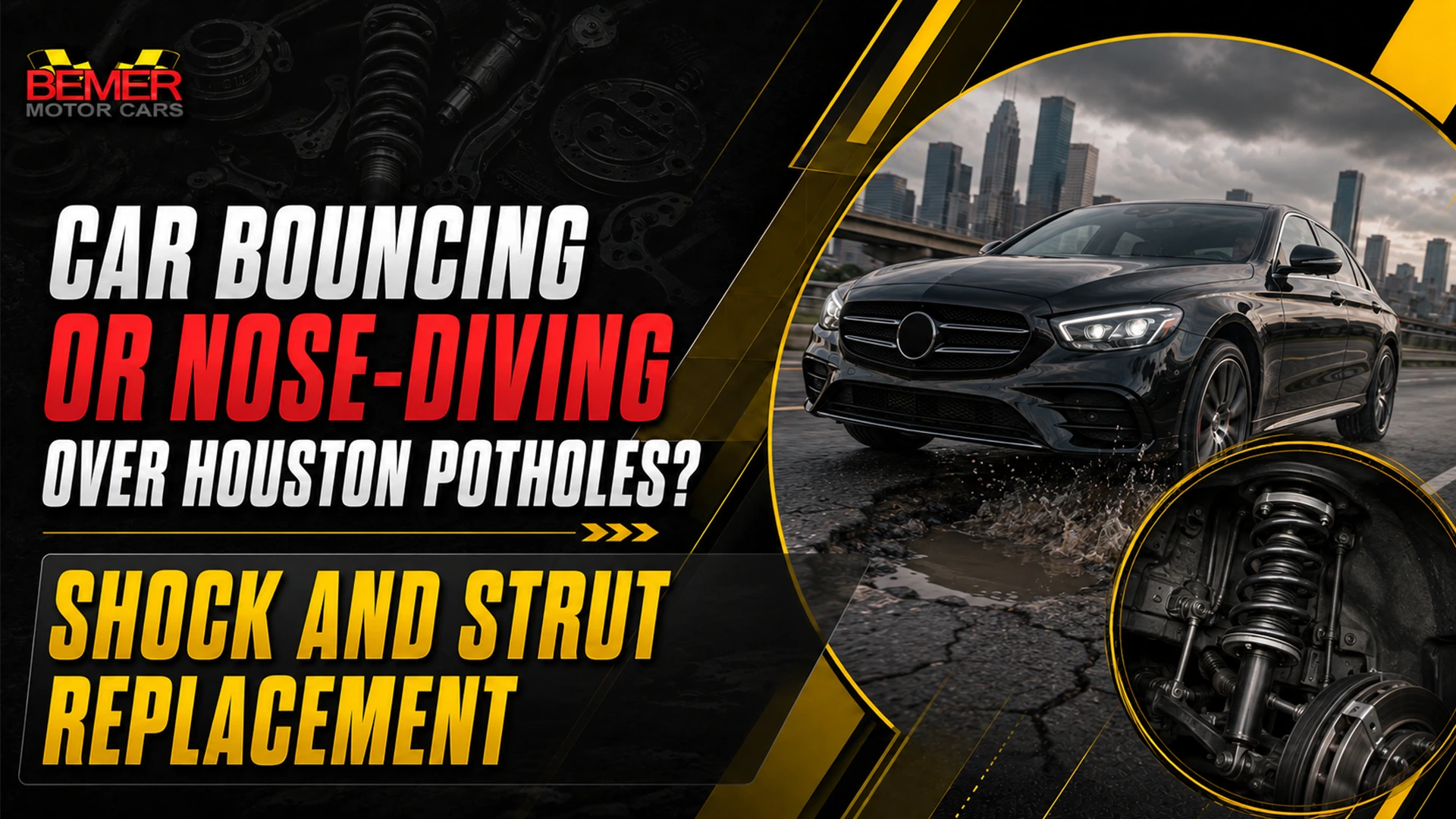
A smooth European ride can turn unsettled fast after a few hard hits on Richmond Avenue, Westheimer, Beltway 8, or the patched lanes around the Galleria area. If your car keeps bouncing after bumps or dips forward when you brake, it may be time to look into shocks and struts replacement. Drivers comparing options for shock and strut replacement in Houston, TX, usually notice the same pattern. The car still runs, but it no longer feels planted, calm, or predictable.
At Bemer Motor Cars, we look at ride control as part of the full suspension and steering system, not as a quick parts guess.
Why Houston Roads Make Weak Shocks and Struts Easier to Notice
Houston driving gives suspension parts a hard workout. Heat, heavy rain, standing water, construction zones, uneven pavement, and potholes can wear down ride-control parts faster than smooth highway driving.
Repeated Bounce After a Bump
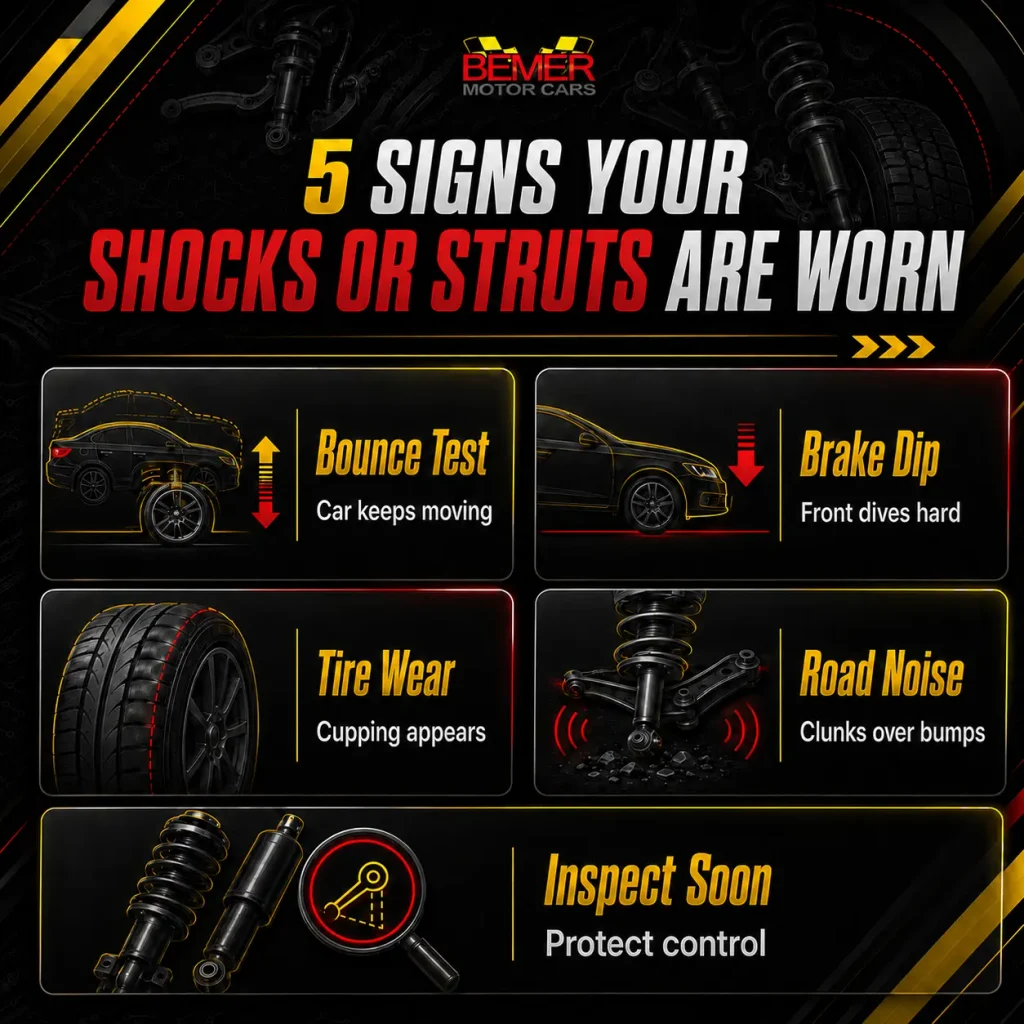
If your car hits a dip and keeps moving up and down, the shocks or struts may no longer be controlling spring movement. The extra bounce can make the vehicle feel loose through curves, ramps, and lane changes.
Car bouncing over bumps is especially noticeable in heavier European sedans and SUVs because the suspension is tuned for a controlled ride. Once the damping fades, the vehicle may feel soft, floaty, or slow to settle.
Nose-Diving During Braking
A small forward dip during braking is normal. A sharp lunge toward the front bumper is different.
If your car nose dives when braking, weak struts or shocks may be letting weight transfer too quickly to the front end. The result can affect comfort, stopping stability, and tire contact, especially in stop-and-go traffic near Westheimer, Memorial, or the Westpark Tollway.
Uneven Tire Wear or Steering Vibration
Worn shocks and struts can let the tire hop or lose steady contact with the road. Over time, that may show up as cupped tire wear, vibration, or a rougher feel at speed.
Some symptoms overlap with tire and wheel issues, so a careful inspection matters before replacing parts.
When Shock and Strut Replacement in Houston, TX, Makes Sense
Not every rough ride means the shocks or struts are bad. The right call depends on how the car behaves, what the inspection shows, and whether other suspension parts are worn too.
The Ride Feels Loose or Floaty
A loose ride is one of the most common bad shocks and struts symptoms. You may feel the vehicle sway more than usual, drift over uneven pavement, or take longer to settle after a bump.
This is where European auto repair experience helps. BMW, Mercedes-Benz, Audi, Porsche, Land Rover, Jaguar, Mini, Volkswagen, and Volvo models often use suspension designs that need model-aware inspection before replacement.
A Leak or Damaged Mount Is Found
Visible fluid on a shock or strut is a strong warning sign. A damaged mount can also create clunks, knocks, or a hollow thud over rough pavement.
If you hear noise more than bounce, this related guide on knocking car noise over bumps can help explain the cause. Struts, mounts, control arms, bushings, and sway bar links can all sound similar.
Alignment Will Not Hold
Shocks and struts help keep the tire controlled as the suspension moves. When they are worn, the car may pull, wander, or chew through tires faster.
After a hard pothole hit, wheel alignment may also be needed. Alignment is not the same repair as shock or strut replacement, but the two issues often show up together after repeated impacts.
What Else Can Feel Like Bad Shocks or Struts?
Several problems can mimic shock and strut wear. A complete inspection helps separate ride-control failure from tire, wheel, brake, or steering concerns.
Wheel Alignment Problems
A car that pulls to one side, wears tires unevenly, or feels off-center may need alignment correction. Houston potholes can shift alignment angles even when the shocks and struts are still usable.
If the vehicle feels harsh and also tracks poorly, both issues should be checked together.
Wheel Balance Issues
A vibration at highway speed may point to wheel balancing rather than worn struts. Balance problems often show up through the steering wheel, floor, or seat.
A pothole can bend a wheel, shift a tire, or knock weight distribution off just enough to make the car shake.
Brake or Steering Concerns
A front-end dip can come from weak struts, but braking symptoms should not be ignored. If nose-diving comes with pulling, pulsation, grinding, or a longer stopping feel, brake repair should be part of the inspection plan.
On some luxury models, steering and suspension electronics also affect ride height, stability, and handling. Bemer Motor Cars is familiar with European systems, including Mercedes-Benz repair concerns tied to suspension feel, braking confidence, and dashboard warnings.
Takeaways
A bouncy ride or sharp nose-dive is more than an annoyance. It can signal worn shocks, struts, mounts, tires, alignment issues, or steering concerns that affect how well your vehicle stays planted on Houston roads.
The best next move is a full inspection before replacing parts. When the cause is confirmed, the right repair can restore comfort, tire life, braking stability, and the controlled feel your vehicle was built to have.
FAQs About Shock and Strut Replacement
How do I know if my shocks or struts are bad?
Common signs include extra bounce, nose-diving during braking, clunking over bumps, uneven tire wear, and a loose or floaty ride. A technician should inspect the struts, shocks, mounts, bushings, control arms, tires, and alignment before recommending replacement.
Is it safe to drive with worn shocks or struts?
Mild wear may still allow safe driving, but severe wear can reduce stability, tire contact, braking control, and emergency handling.
Do shocks and struts need to be replaced in pairs?
In most cases, shocks and struts should be replaced in pairs. Replacing both front or both rear units helps keep the vehicle balanced so one side is not controlling movement better than the other.
Can Houston potholes damage shocks and struts?
Yes, Houston potholes can damage shocks and struts. A hard impact can damage mounts, bend suspension parts, affect alignment, or speed up shock and strut wear. Houston road environment includes plenty of construction, heat, drainage, and pavement changes that can make ride-control problems show up quickly.
Do I need an alignment after shock or strut replacement?
An alignment is often needed after shock or strut replacement, especially when struts are replaced or suspension geometry is disturbed. An alignment helps protect tire wear and keeps the vehicle tracking correctly after the repair.
Restore a Safer, Smoother Ride with Bemer Motor Cars
If your car feels bouncy, unstable, or nose-heavy over Houston roads, Bemer Motor Cars can inspect the suspension and explain what is worn. We can also help you decide whether shock and strut replacement in Houston, TX, is the right next step.
Our team works with European and luxury vehicles every day and can check related systems that affect ride control. These include alignment, tires, steering, brakes, and suspension hardware.
Visit Bemer Motor Cars at 9201 Richmond Ave Houston, TX 77063, or call (713) 266-2690 to schedule service.